
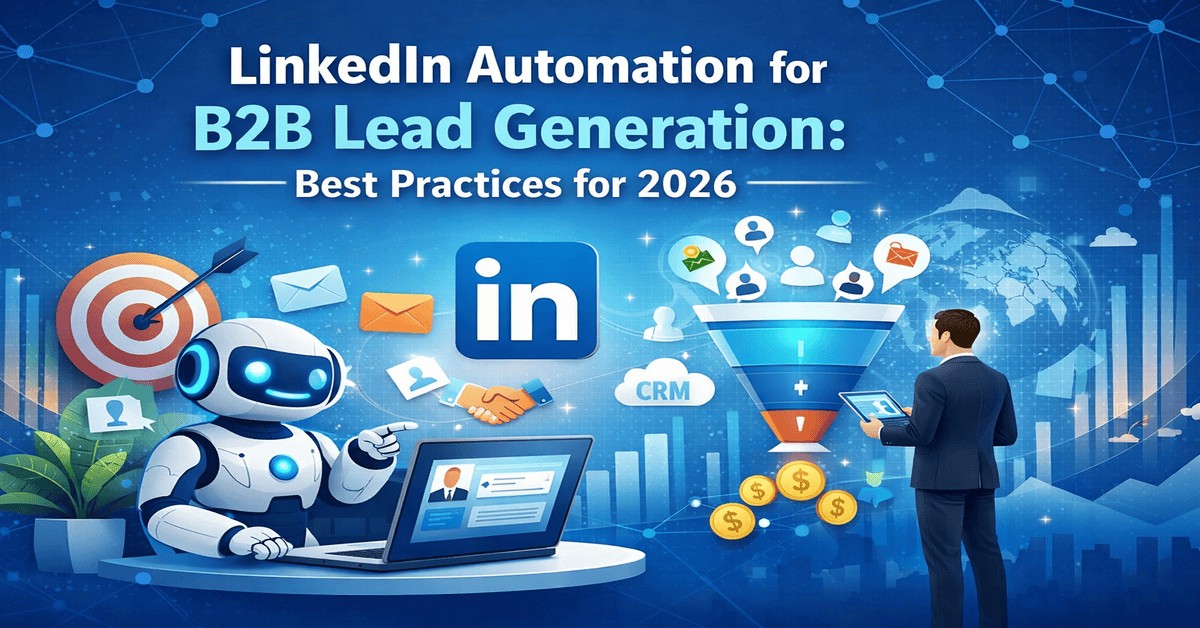
LinkedIn Automation for B2B Lead Generation: Best Practices for 2026
Introduction
In the world of B2B marketing, LinkedIn has become one of the most powerful platforms for connecting with decision-makers, building relationships, and generating high-quality leads. With over 1.3 billion members worldwide, it provides unmatched access to professionals across industries and roles. As competition intensifies in 2026, manually handling outreach, connection requests, messaging, and follow-ups is increasingly time-consuming and inefficient for sales and marketing teams.
This is where LinkedIn automation enters the picture. Importantly, LinkedIn strictly prohibits third-party automation tools to prevent spam and abuse, so effective strategies rely on compliant, human-like approaches using native features, approved integrations, or cloud-based safe tools. In 2026, the focus has shifted from bulk actions to intelligent, AI-enhanced personalization that leverages data insights and precise targeting. These methods help businesses scale lead generation while fostering genuine relationships and staying fully compliant with platform policies.
This comprehensive guide dives deep into best practices for using LinkedIn automation responsibly for B2B lead generation in 2026, drawing on the latest trends and proven tactics.
Why LinkedIn Is Essential for B2B Lead Generation
LinkedIn stands out for B2B because it’s designed for professionals, connecting users by job roles, industries, companies, and seniority levels—unlike consumer-focused platforms. Here are the key reasons it dominates B2B lead gen:
- Direct Access to Decision-Makers: Reach CEOs, CMOs, founders, VPs, and directors who actively use the platform for networking and insights.
- Advanced Targeting Capabilities: Filter by job title, industry, company size (e.g., 500+ employees), geography, seniority, and even skills or recent activity.
- Superior Conversion Rates: LinkedIn generates 80% of B2B social leads and boasts inbound conversion rates up to 14.6%—far outperforming cold outreach (1.7%) or platforms like Facebook/Twitter (277% less effective).
- Built-in Credibility: Professional profiles, endorsements, and content sharing establish trust faster than other networks.
For B2B organizations, LinkedIn isn’t just social media—it’s a core sales and marketing channel driving pipeline growth.
What Is LinkedIn Automation?
LinkedIn automation refers to tools, scripts, or strategies that streamline repetitive tasks such as sending connection requests, messaging prospects, following up, visiting profiles, and engaging with posts. Modern tools mimic human behavior to avoid detection, but LinkedIn’s strict policies ban unauthorized bots—violators face restrictions or bans (up to 23% risk).
The goal is scaling personalized outreach without sacrificing quality. Responsible usage involves gradual activity ramps, human oversight, and integration with CRM systems for tracking.
Best Practices for LinkedIn Automation in 2026
Follow these expanded, actionable practices to maximize results while minimizing risks.
1. Prioritize Hyper-Personalization Over Mass Messaging
Generic blasts kill engagement—recipients spot them instantly. Top performers customize every touchpoint using dynamic variables:
- Prospect’s first name and recent post/activity.
- Company-specific pain points (e.g., “Saw your team’s expansion into AI”).
- Shared connections, mutual interests, or industry trends.
- Role-tailored value (e.g., “As a CMO, you might like this growth hack”).
Tools with AI personalization boost acceptance rates by 30-50% and responses by 2-3x. Always A/B test messages for optimization.
2. Master Precise Account Targeting
Automation fails without laser-focused lists. Build ideal customer profiles (ICPs) using LinkedIn’s filters:
- Industry (e.g., SaaS, fintech).
- Job titles (e.g., Head of Sales).
- Company size (50-500 employees).
- Geography (e.g., US/Europe).
- Seniority (VP+), skills, or group memberships.
Integrate with Account-Based Marketing (ABM): Prioritize 50-100 high-value accounts per campaign, researching each via Sales Navigator for intent signals like job changes or funding news.
3. Warm Up and Optimize Your Profile First
Prospects check your profile before responding—make it irresistible:
- Headline: Beyond job title, e.g., “Helping SaaS CMOs 2x Pipeline | AI Lead Gen Expert.”
- Summary: 3-5 paragraphs on value prop, results (e.g., “Generated 500+ leads”), testimonials, and a clear CTA.
- Experience/Featured: Quantified achievements, case studies, lead magnet links.
- Visuals: Professional photo (smiling, branded background), custom banner.
- Social Proof: 5+ recommendations, shared posts, and endorsements.
A stellar profile can lift response rates by 40%.
4. Adhere to Safe Automation Limits
LinkedIn monitors for spam aggressively. Recommended limits for warm accounts:
- Connection requests: 100-200/week (15-40/day max), with personalized notes.
- Messages: 50-100/day, spaced 1-2 minutes apart.
- Profile views: 80-150/day.
- Post engagements: 50-100/day.
Tips: Start slow (50% limits week 1), use proxies/cloud tools for safety, pause weekends, and monitor SSI (Social Selling Index) scores.
5. Build Smart, Multi-Touch Follow-Up Sequences
Single messages get 10-20% replies—sequences hit 40%+. Example 7-day flow:
- Personalized connection request.
- Day 2: “Thanks for connecting—loved your post on [topic].”
- Day 4: Share value (article/case study).
- Day 7: Soft pitch (“Quick chat on [benefit]?”).
Automate timing but review drafts manually for tone.
6. Amplify with Content Synergy
Post 3-5x/week: Industry insights, polls, carousels, videos. Tag prospects subtly. Content warms audiences, positioning you as an expert before outreach.
7. Integrate with CRM and Analytics
Sync with HubSpot/Salesforce for:
- Lead tracking and scoring.
- Automated workflows.
- ROI metrics (e.g., CAC, LTV).
Common Mistakes to Avoid
- Spammy pitches without warmup.
- Broad targeting (e.g., all “marketing” roles).
- Ignoring replies—always human-respond.
- Hitting limits abruptly.
- No A/B testing or analytics.
Success = 80% strategy + 20% tech.
Future of LinkedIn Automation
By late 2026, expect:
- AI message drafting from prospect data.
- Predictive scoring via intent signals.
- Native AI tools from LinkedIn.
- Deeper CRM/ABM synergies.
Compliance-first hybrids will win.
Conclusion
LinkedIn automation, done right, transforms B2B lead gen in 2026. Focus on personalization, safety, targeting, and integration to build pipelines ethically and effectively. Start small, measure relentlessly, and scale—your competitors already are. Ready to implement?
Reference :
- https://business.linkedin.com/marketing-solutions
- https://blog.hubspot.com/sales/linkedin-lead-generation
- https://www.salesforce.com/resources/articles/b2b-lead-generation/
- https://www.gartner.com/en/marketing
📩 Ready to harness WhatsApp stories for your business? Let’s talk.
📞 Call us: +91 9762910165
📧 Email:info@martechpanthers.com
🌐 Visit: https://martechpanthers.com/